

Major cultural Experiences
Batwa Cultural experiences
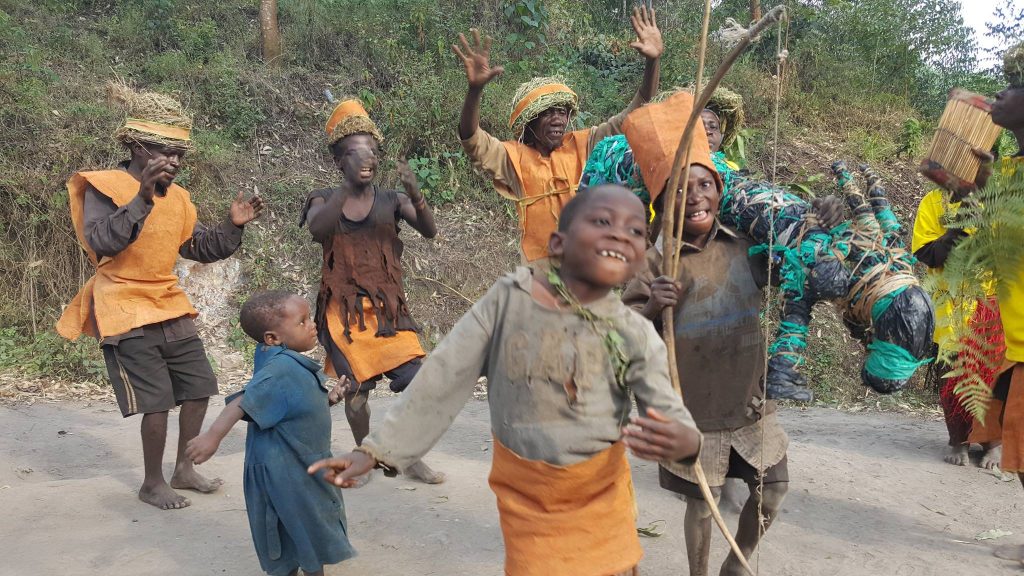
The Batwa are one of the indigenous ethnic groups of Uganda and Central Africa. They are traditionally known as forest people who lived as hunter-gatherers in the tropical rainforests, especially around Bwindi Impenetrable National Park and Mgahinga Gorilla National Park in south-western Uganda. Their culture is closely connected to the forest, which they regarded as their home, source of food, medicine, and spiritual life.
Traditionally, the Batwa depended on hunting wild animals, gathering fruits, honey, and medicinal plants, and making simple tools from natural materials. They lived in small, mobile groups and used grass and leaves to build temporary shelters. Music, dance, and storytelling were important parts of Batwa life, often used to pass on history, morals, and survival skills from one generation to another.
The Batwa have a rich intangible cultural heritage, including unique songs, dances, rituals, and spiritual beliefs. They believed in forest spirits and performed ceremonies related to hunting, healing, and important life events. Elders played a key role in guiding the community and preserving traditional knowledge.
In the early 1990s, the Batwa were evicted from their ancestral forests when these areas were gazetted as national parks for wildlife conservation. This displacement greatly affected their traditional way of life, forcing many Batwa to adopt farming and casual labor. Today, Batwa cultural experiences, community visits, and performances are used to preserve their culture, raise awareness, and support livelihoods through responsible tourism.
Karamojong (Karamoja) Culture
The Karamojong are an indigenous ethnic group living mainly in the Karamoja sub-region of northeastern Uganda. Their culture is deeply rooted in pastoralism, with cattle at the center of social, economic, and spiritual life. To the Karamojong, cattle represent wealth, identity, status, and security, and many cultural practices revolve around livestock.
Traditionally, the Karamojong are semi-nomadic pastoralists, moving with their herds in search of pasture and water. They live in fortified homesteads known as manyattas, which protect families and animals. Social life is organized around clans and age-set systems, where elders make important decisions and guide the community.
The Karamojong have a rich intangible cultural heritage that includes music, dance, oral poetry, and storytelling. Songs and dances are often performed during ceremonies such as weddings, initiation rites, harvest celebrations, and community gatherings. Their traditional dress, especially the colorful beads worn by women, reflects beauty, identity, and social status.
Spiritual beliefs among the Karamojong center on Akuj, a supreme god believed to control rain, fertility, and life. Rituals and sacrifices are performed to seek blessings, rain, and protection for people and livestock. Elders and spiritual leaders play an important role in religious and cultural practices.
Today, the Karamojong culture is gradually changing due to modernization, education, government policies, and settlement programs. However, many traditions—such as cattle keeping, communal living, and respect for elders—remain strong. The Karamojong culture is an important part of Uganda’s cultural heritage, symbolizing resilience, strong community values, and a close relationship between people, land, and livestock.